
Ghana Police: Your Tyres Could Look New but Be Too Old for the Road
Ghana’s Police say a tyre must not be more than six years old from manufacture. Here is how to read its four-digit date code and check for wear before you drive.
Update, 29 September 2026: The Ghana Police Service has moved full TRAFFITECH-GH implementation from 1 November to 1 November 2026 for more public education. Read the new Police announcement. Existing road traffic rules remain in force.
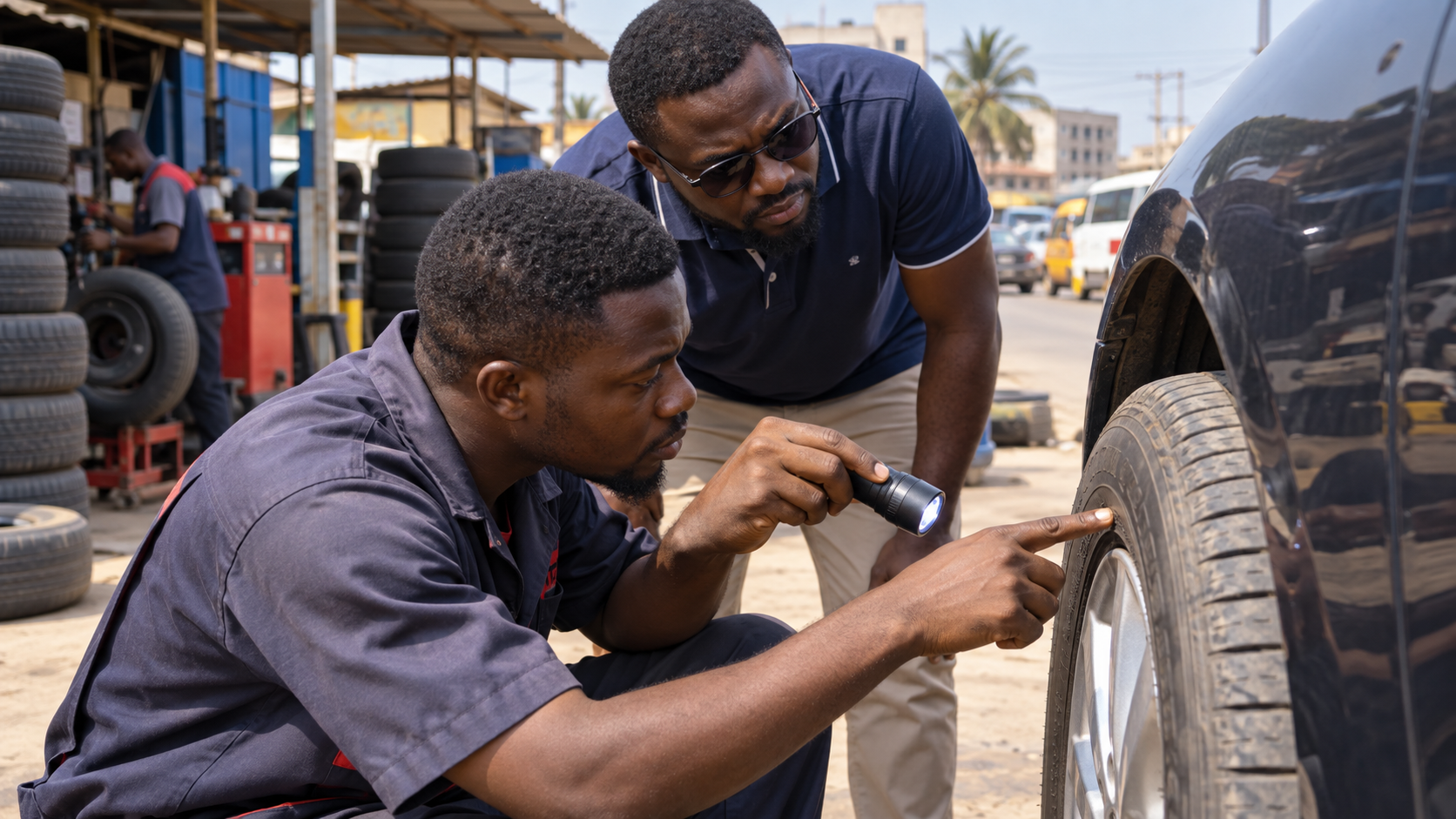
A tyre can have deep-looking grooves and still be too old for the road. As Ghana’s new road traffic rules draw attention, the Police Motor Traffic and Transport Department (MTTD) is asking motorists to look beyond the tread and check the date moulded into each tyre’s sidewall.
In a 28 September interview reported by Graphic Online, MTTD officer ACP Alexander Kwaku Obeng said Regulation 87 of the Road Traffic Regulations, 2026 (L.I. 2519) requires safe tyres and prohibits fitting one more than six years old from its date of manufacture. That is the date the tyre was made, not the date you bought it or put it on your car.
Find the four digits
Look closely at the sidewall—the rubber between the wheel rim and the tread—for a four-digit manufacture code, often in a small recessed oval or window. The first two digits are the week of the year; the last two are the year. Ghana DVLA’s standardised driver-instructor manual explains the same reading method.
| Example code | What it means | At 29 September 2026 |
|---|---|---|
| 1220 | 12th week of 2020, around March | More than six years old |
| 3624 | 36th week of 2024, around September | About two years old |
Check the full date, not only the year. A tyre made late in 2020 reaches six years later than one made early that year. The four digits are a manufacturing date code, not a separate printed “expiry date”. If the number is difficult to find or read, ask a tyre specialist to show it to you on every tyre; the complete code may be on the inward-facing sidewall.
Age is only one check
Walk around the vehicle and look for bulges, sidewall cracks, cuts, exposed cords and uneven or very shallow tread. Check tyre pressure against the vehicle manufacturer’s recommendation with a gauge, ideally before a journey when the tyres are cold. The DVLA training manual describes how poor inflation, damaged structure and worn tread can affect grip and increase the risk of tyre failure. A spare tyre or one on a rarely driven vehicle also ages while it sits unused.
If a tyre is damaged or its condition is uncertain, have a qualified fitter inspect it and replace it where needed. A roadworthy certificate is not a substitute for checking the tyres between inspections. ACP Obeng said the DVLA periodically certifies vehicles as roadworthy, while motorists remain responsible for maintaining them.
Ask before you pay for “new” tyres
At the shop, ask the dealer to point out the date code on each tyre you are buying. A tyre may be unused but already old stock. ACP Obeng specifically advised against buying a tyre made in 2019 in 2026. Keep the purchase record and check the size and specification recommended for your vehicle.
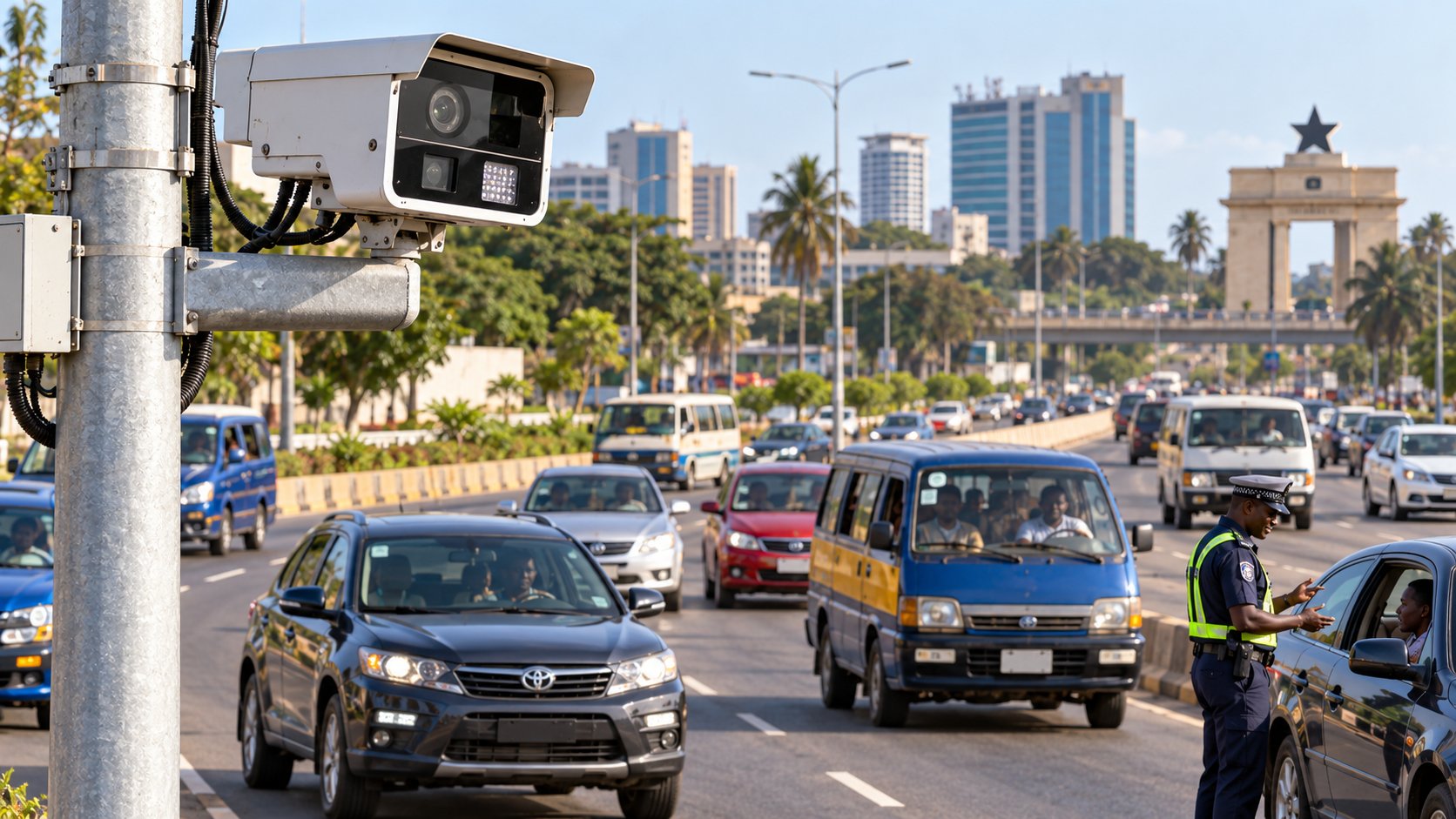
The regulations are already in force. The Police’s planned full TRAFFITECH-GH rollout on 1 November concerns automated traffic enforcement; the Police have not said that a camera can read a tyre’s age from a passing car. Tyre safety still deserves a physical check at home, in the workshop and during roadworthiness or roadside inspections. The useful question this week is simple: do you know when the tyres on your car were made?
Sources
Graphic Online’s report of ACP Obeng’s 28 September MTTD interview; DVLA Ghana, Standardised Instructor’s Manual for Heavy Goods Vehicle Drivers, tyre checks and date codes; Ghana Police road safety alerts; Information Services Department on TRAFFITECH-GH rollout.
Reader conversation
What do you think?
Like this article or add your voice to the discussion. Comments are reviewed before publication.


Comments 0
Loading comments…