
Trotro, Okada and Roadside Trading: Who Faces a Fine Under Ghana’s New Road Rules?
From unauthorised commercial tricycle operations to fare overcharging and roadside selling, the rules address different people and different conduct.
Update, 29 September 2026: The Ghana Police Service has moved full TRAFFITECH-GH implementation from 1 November to 1 November 2026 for more public education. Read the new Police announcement. Existing road traffic rules remain in force.
Who can be penalised when a trotro stops in the wrong place, a fare is overcharged or a commercial tricycle operates without the required approval? The answer depends on the person and the specific rule. Ghana’s Road Traffic Regulations, 2026 (L.I. 2519), cover operators, riders, drivers and roadside traders separately.
Commercial motorcycles and tricycles
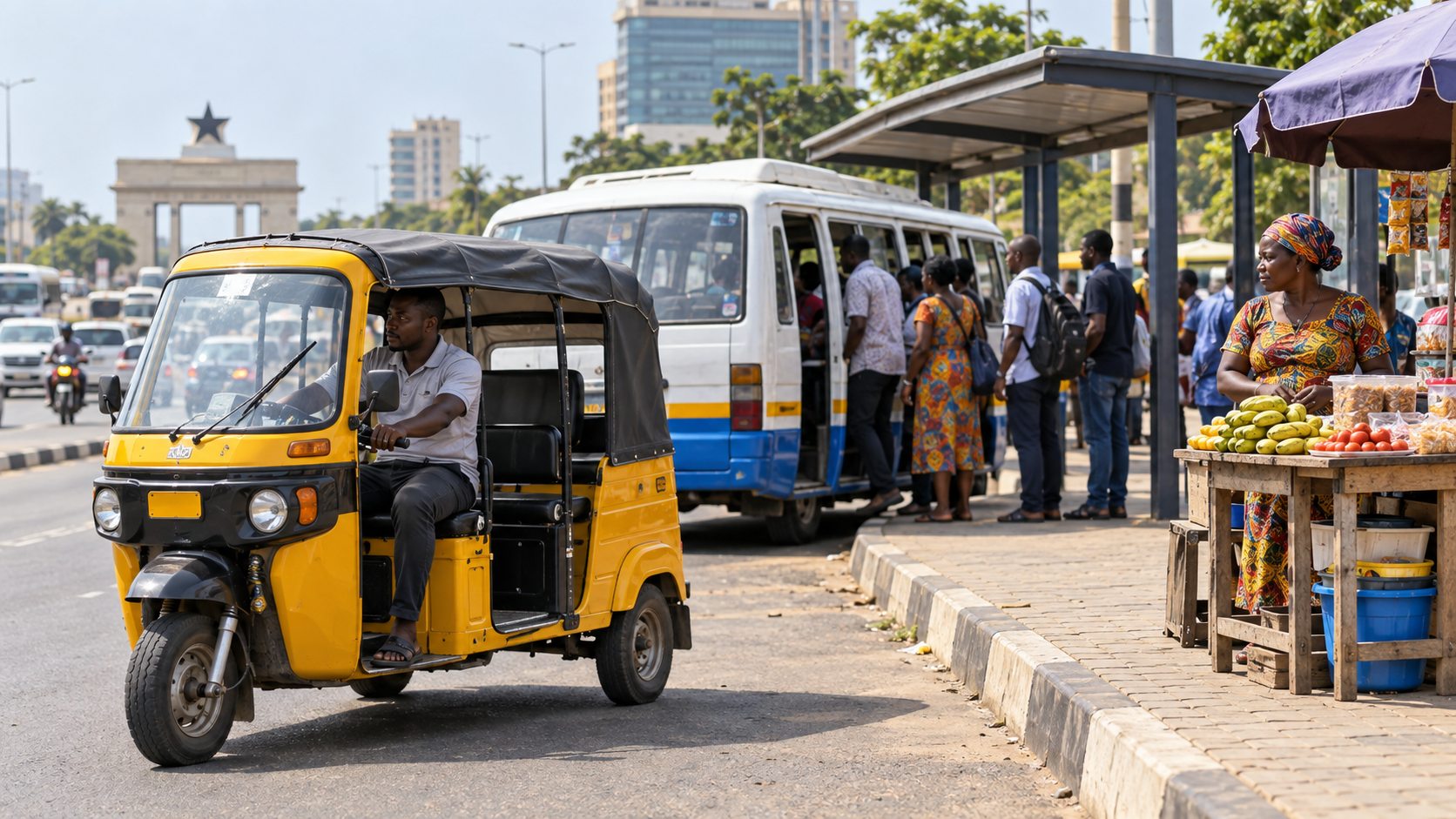
The regulations establish an authorisation framework for commercial motorcycles, tricycles and quadricycles. Running a transport organisation without the required licence or district permit can attract 50–100 penalty units (GH¢600–GH¢1,200), with possible imprisonment of eight to 24 months, or both. A commercial tricycle or quadricycle rider without the required valid licence faces 25–50 units (GH¢300–GH¢600), possible imprisonment of up to eight months, or both. These describe distinct operator and rider obligations; the mere sight of an okada or aboboyaa is not proof of an offence.
For trotro and taxi drivers
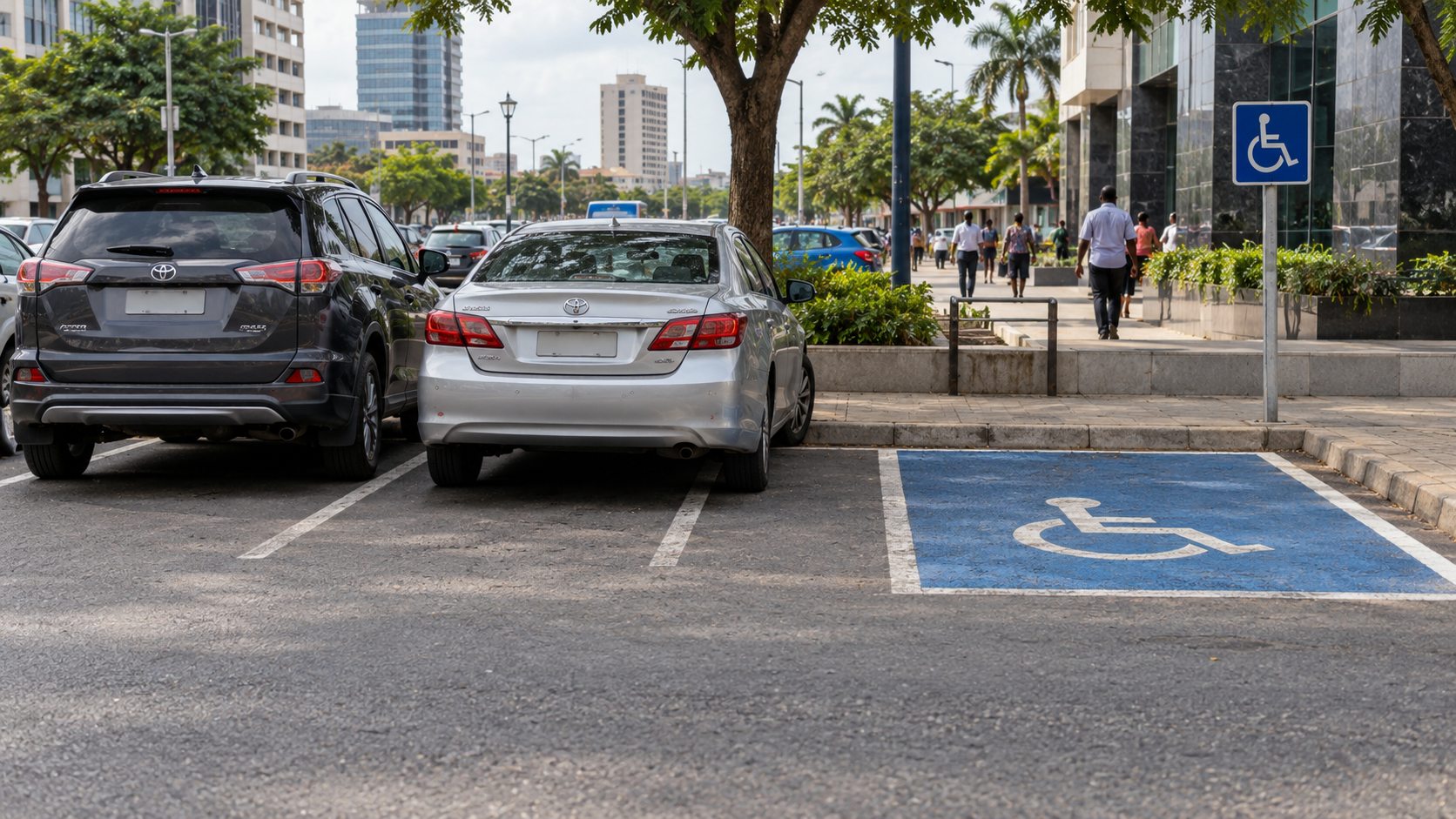
Regulation 180 addresses demanding a fare above the amount predetermined by transport operators and the relevant ministry. Regulation 231 concerns stopping or parking a bus or taxi outside an authorised stop or stand. Each is described with a fine of 10–25 units (GH¢120–GH¢300), up to 30 days’ imprisonment, or both. A separate provision concerns failure to provide required facilities for persons with disabilities on public transport, with the same stated range.
For roadside sellers
Regulation 142 prohibits selling, displaying or offering goods on or alongside a road or pedestrian walkway and at certain hazardous locations. The stated penalty is up to 50 units (GH¢600), up to three months’ imprisonment, or both. Preaching or hawking in a moving public or commercial vehicle is addressed under a different provision and can attract the general penalty of 10–50 units.
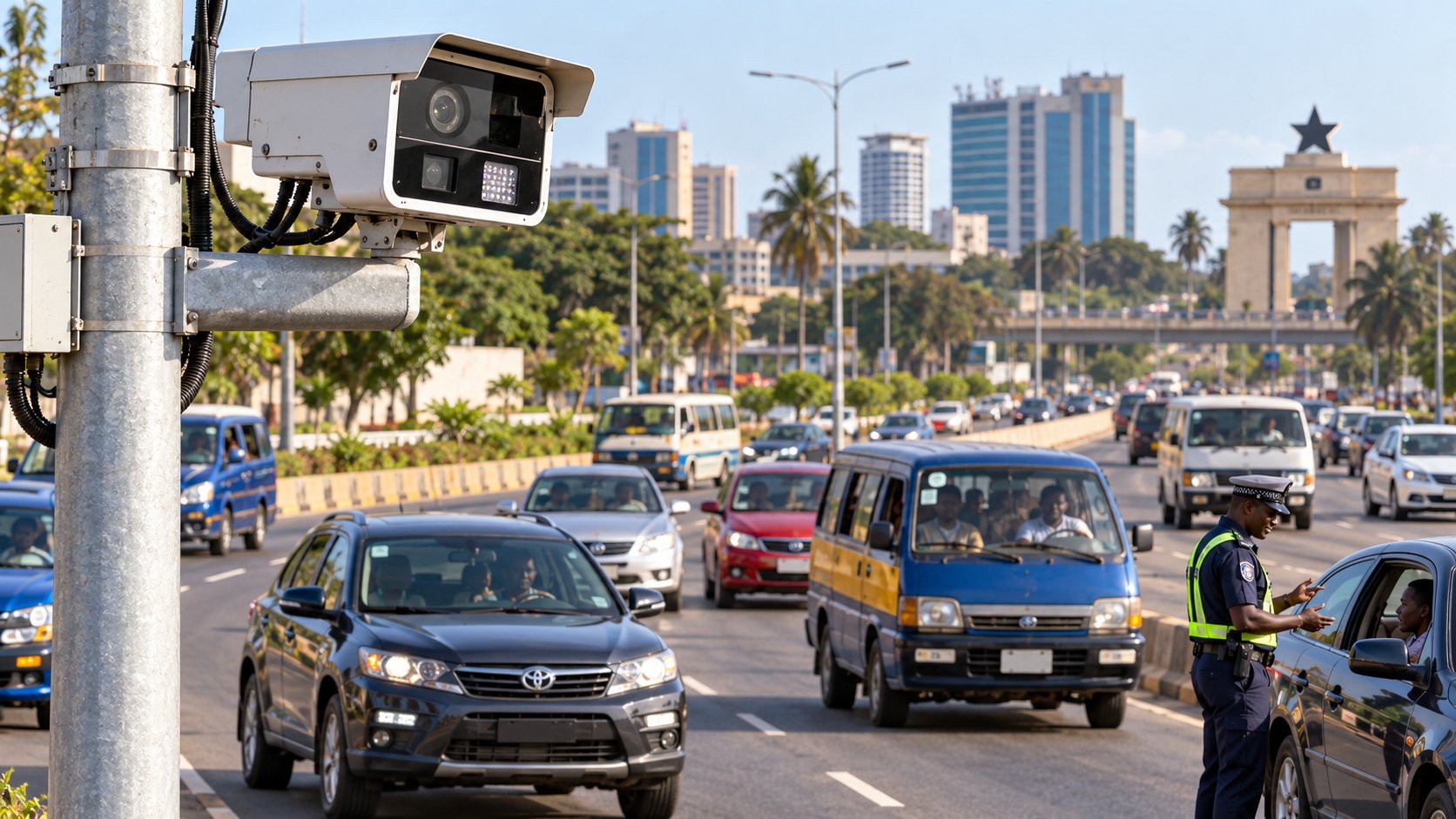
Do not read this list as a list of automatic camera fines. The rescheduled full TRAFFITECH-GH rollout on 1 November is a related enforcement development, but each offence still needs its own facts and legal route. Read why a camera amount and a court penalty can differ.
These are offences under Ghana’s Road Traffic Regulations, 2026 (L.I. 2519). The stated fine and imprisonment ranges are legal penalties, with imprisonment subject to court proceedings. They should not be mistaken for an automatic TRAFFITECH-GH camera notice.
Sources
Citi Newsroom, explainer of regulations 141, 142, 180, 231 and commercial authorisation; Police Legal and Prosecution Unit officer’s penalty breakdown; Ghana Revenue Authority, value of a penalty unit
Reader conversation
What do you think?
Like this article or add your voice to the discussion. Comments are reviewed before publication.
Comments 0
Loading comments…