
TRAFFITECH-GH Now Set for 1 November: Police Cameras, SMS Fines and the DVLA’s Role
Police have moved full TRAFFITECH-GH implementation to 1 November. Here is how SMS notices work, what to check with the DVLA, and how to verify or contest a fine.
Update, 29 September 2026: The Ghana Police Service has moved full TRAFFITECH-GH implementation from 1 November to 1 November 2026 for more public education. Read the new Police announcement. Existing road traffic rules remain in force.
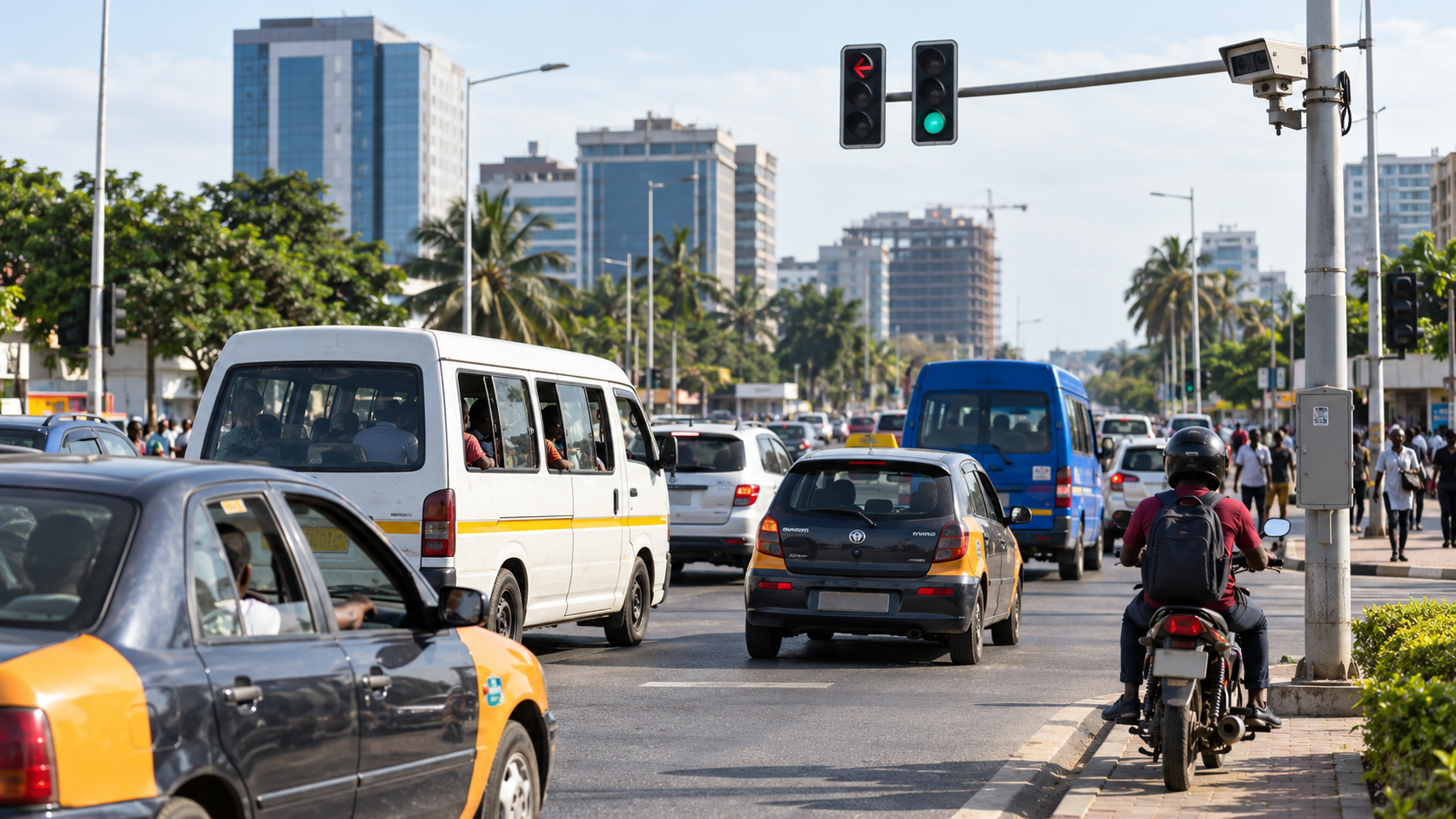
From Thursday, 1 November 2026, the Ghana Police Service plans to begin full implementation of TRAFFITECH-GH, its automated road traffic enforcement programme. The Motor Traffic and Transport Department (MTTD) will use cameras and handheld devices to identify suspected offences. The Police say the evidence is reviewed before an Electronic Notice of Violation (ENV) is sent by SMS.
The Road Traffic Regulations, 2026 (L.I. 2519), provide the wider framework. 1 November marks the planned full operation of the Police system; its captured evidence is reviewed before a notice is issued. The DVLA remains central to driver licensing, vehicle registration and roadworthiness records.
Which offences may be recorded?
The Police’s TRAFFITECH-GH guidance names speeding and running red lights as examples of camera-detected offences. It also lists expired roadworthiness certificates, wrongful overtaking, non-use of seatbelts, driving with an expired licence, uninsured vehicles and misuse of sirens among offences the programme will enforce. Fixed and mobile cameras, sensors, speed-measuring devices and officers’ handheld devices are part of the system.
For a camera-detected offence, the notice normally goes to the vehicle’s registered owner. An MTTD officer using a handheld device after a roadside stop may issue a notice directly to the driver. The SMS should identify GPS-MTTD as the sender and give a ticket number, location, date, time, vehicle registration, offence, amount and deadline.
Where does the DVLA come in?
The Police system uses vehicle and driver records linked to the DVLA. That makes accurate ownership and contact details important. If a vehicle has been sold, the change of ownership should be completed with the DVLA; the Police guidance says notices can still reach the person recorded as owner when that change has not been made.
The same guidance says outstanding TRAFFITECH-GH fines can block DVLA services, including licence renewal, vehicle transfer, registration and roadworthiness inspection, until the fine is cleared. Motorists can dial *220# to check for outstanding fines before visiting the DVLA. The DVLA’s licensing and vehicle certification work is distinct from the Police’s 1 November rollout; an earlier Linguist News explainer also explains why a driver’s licence and a vehicle’s roadworthy certificate are separate matters.
If an SMS arrives, check it before paying
According to the Police, use the ticket number at ghana.gov.gh to review the alleged offence and photo or video evidence. The guidance says a recipient may pay or start an online contest within 14 days of the notice. Payment is through the government portal or by dialling *222# and choosing option 6. The Police state that a 1% daily penalty on the original fine applies after the 14-day payment period.
A genuine Police notice should come from GPS-MTTD. The Police warn that an SMS containing a clickable payment link is likely fraudulent. Type the government address yourself, and do not send money to an officer or a private mobile-money number. For help with a ticket, the Police list 059 692 2402 as the TRAFFITECH-GH call centre.
Before 1 November, check your licence, vehicle roadworthiness and insurance status, make sure DVLA ownership and phone records are current, and observe the rules at junctions and on the road. The practical change is that an offence may be documented and followed up electronically even when a driver is not stopped at the scene.
Sources
Information Services Department: Police rollout announcement, 16 September 2026; Ghana Police Service: TRAFFITECH-GH guidance and FAQs; Ghana News Agency: Transport Minister on DVLA coordination, 17 September 2026; DVLA services.
Reader conversation
What do you think?
Like this article or add your voice to the discussion. Comments are reviewed before publication.


Comments 0
Loading comments…